
Sports Betting Math Made Simple for Smarter Wagers
Implied probability turns a decimal odd into a percentage you can compare against your own estimate. The formula is 1 divided by the decimal odd. At one bookmaker,…
Turn odds into probabilities, spot value, size bets with Kelly, and protect your bankroll with practical calculators and concise guides.
Open the calculators
Run the numbers before you place the next bet.
Open the calculatorsImplied probability turns a decimal odd into a percentage you can compare against your own estimate. The formula is 1 divided by the decimal odd. At one bookmaker,…
Bookmakers do not need to predict winners. They need the total money on both sides to exceed the total payout. A match priced at 1.90 on each side…
The phrase bookmaker bet often appears when someone tries to separate the stake from the odds. That confusion is useful because a fight bet is not a prediction.…
Betting math starts with one conversion. A two-way market priced at 1.90 and 1.90 carries implied probabilities of 52.63% each, totaling 105.26%. That extra 5.26% is the bookmaker’s…
Team Bets: Implied Probability, Value, and Staking Odds on team sports are more than a price. They encode a probability estimate plus a built-in margin. Converting odds to…
Tennis and football betting begins with converting decimal odds into implied probability. The formula is 1 divided by the decimal odds. Odds of 2.00 imply 50.0 percent. Odds…
A bookmaker does not sell predictions. It sells probabilities with a profit margin baked in. For a coin toss the true chance of heads is 50 percent, so…
Bookmaker odds are not predictions. They are prices with a built-in markup. When you place football bets with bookmakers, you buy an implied probability that is deliberately overstated.…
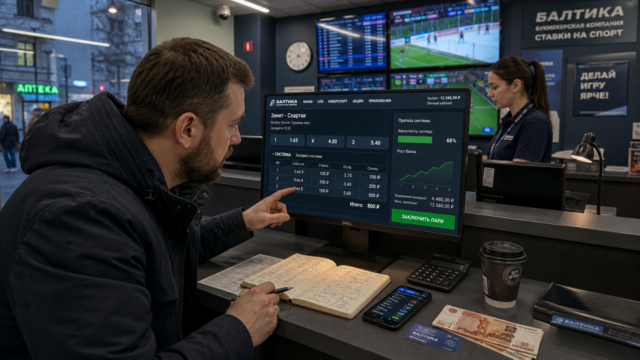
A real ruble bet in a licensed Russian office is a fixed-odds transaction processed through the Unified Settlement System. A betting-information site tracks 17 licensed bookmakers connected to…
A bet in a bookmaker’s office is a paid forecast on an event outcome with a fixed odds multiplier. The odds show two things: the bookmaker’s implied probability…
Translate common odds formats into implied probability so you can see what the market is pricing in.
Compare your estimated probability with the market price and identify positive expected value before you bet.
Use full or fractional Kelly calculations to connect bet size with edge, odds, and bankroll risk.
See how small differences in price affect break-even probability, expected return, and long-run results.